# Introduction

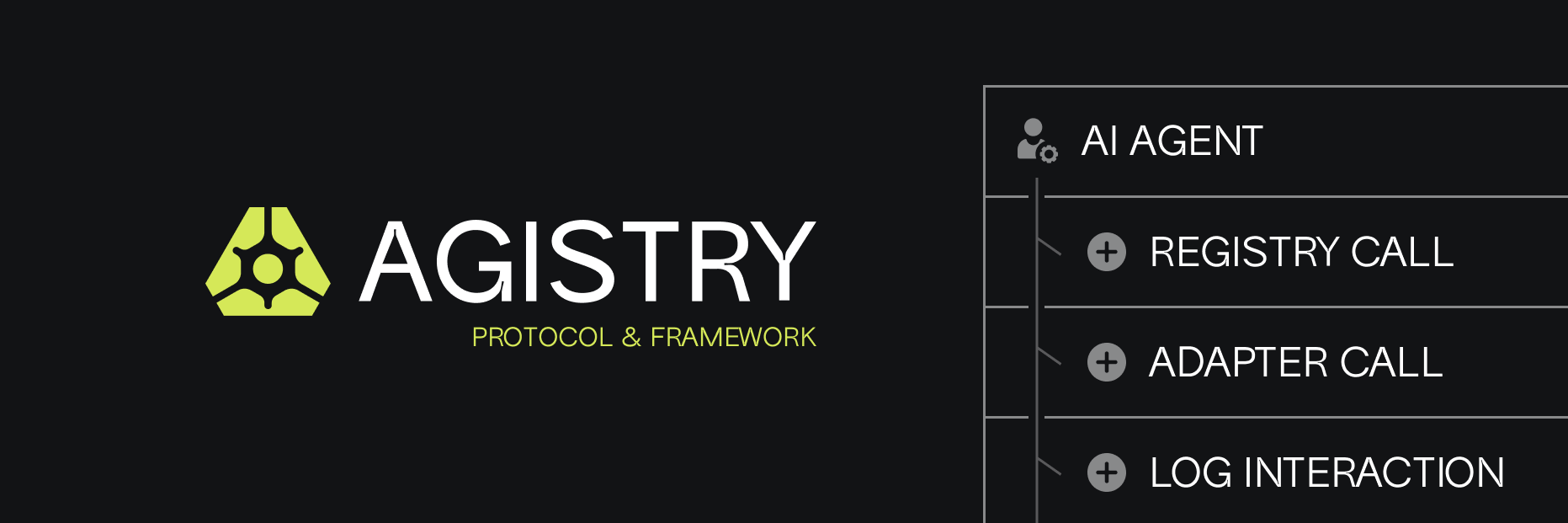
<figure><img src="https://4059554020-files.gitbook.io/~/files/v0/b/gitbook-x-prod.appspot.com/o/spaces%2FwMVOvy6A425WZ7vVWOKW%2Fuploads%2FVMVbD481dMJyMxU8bHs9%2Fbanner.png?alt=media&#x26;token=b3b5902f-b097-406e-8e1e-7f0c30812101" alt=""><figcaption></figcaption></figure>

Welcome to the official documentation for **Agistry**, a decentralized AI operations platform enabling agent-to-module connectivity and programmable workflows.

### What is Agistry?

Agistry offers a framework and dashboard where users can manage and deploy agents, connect tools, and define workflows suitable for automation. It is a modular, decentralized framework that allows AI agents to connect, interact, and orchestrate actions through a unified network of smart adapters and programmable modules. Unlike traditional API management or contract integration systems, Agistry is designed with AI-native interactions in mind, where every agent is modular, every tool is standardized, and every connection is composable.

***

Agistry lets developers and users create agents in our dashboard or plug their agents into a growing ecosystem of AI modules like OpenAI, image generation services, Telegram bots, Discord bots, email automation tools, voice synthesis APIs, Google Sheets, on-chain protocols, data scrapers, and more, all without writing custom integration code.

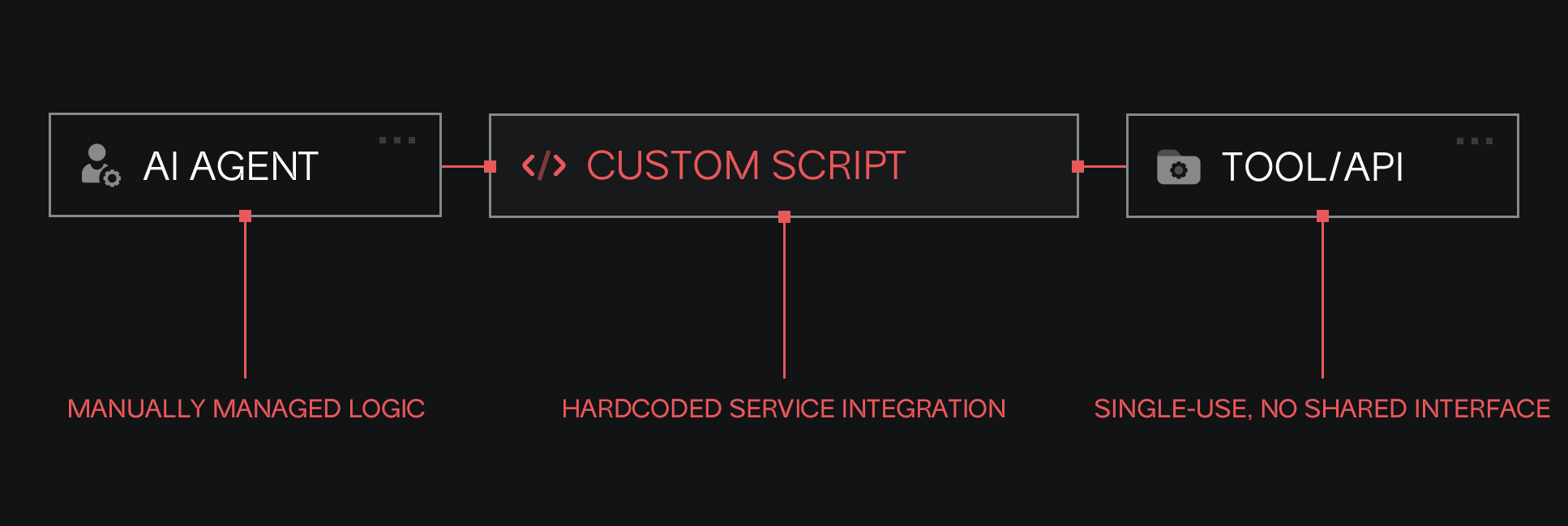
<figure><img src="https://4059554020-files.gitbook.io/~/files/v0/b/gitbook-x-prod.appspot.com/o/spaces%2FwMVOvy6A425WZ7vVWOKW%2Fuploads%2FvsOItbquFHhBhHWWG8l5%2Ff1.png?alt=media&#x26;token=f2583fd5-cd3b-46d6-95e1-9b82be2c4332" alt=""><figcaption><p>figure 1.0 - Traditional way. Agents require custom scripts to interact with each service individually. Each connection is hardcoded, non-standard, and lacks composability, making it difficult to scale or reuse logic across tools</p></figcaption></figure>

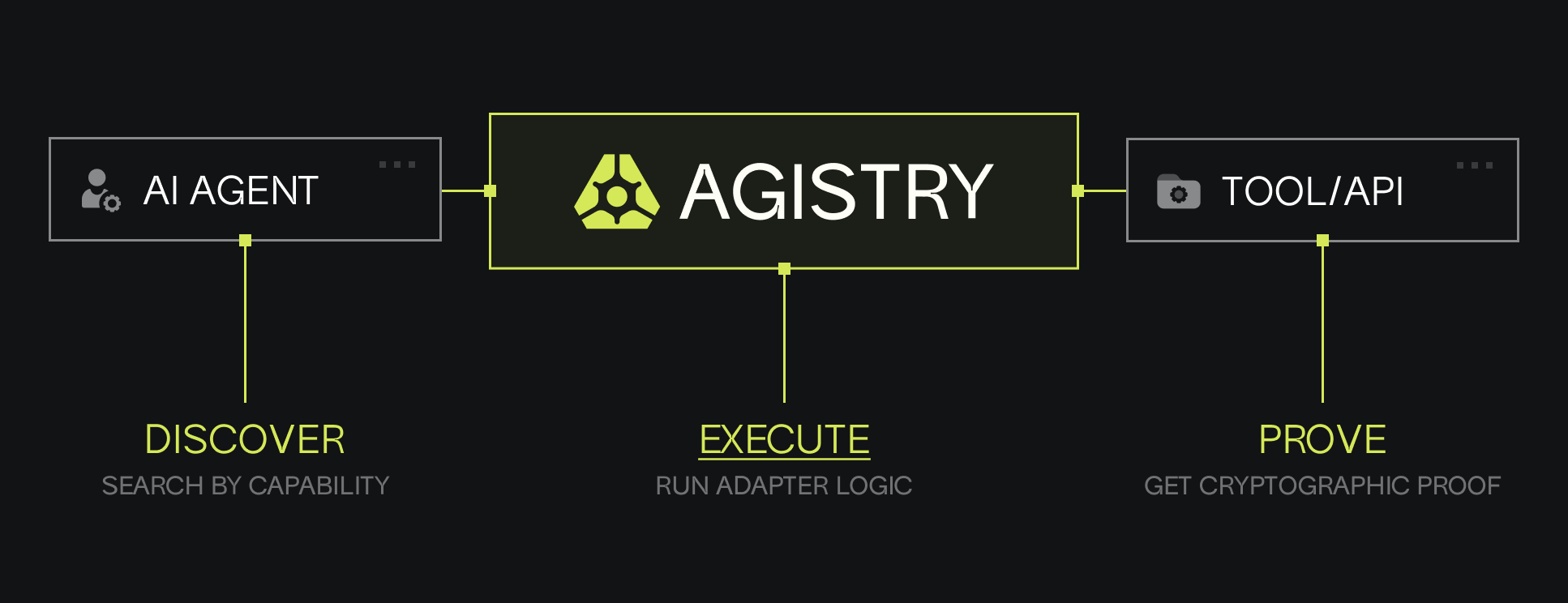
Instead of going the traditional way (*figure 1.0*), where agents require custom API scripts to interact with each service individually, Agistry (*figure 1.1*) provides a streamlined approach, allowing agents to plug into standardized adapters and instantly connect to tools.

<figure><img src="https://4059554020-files.gitbook.io/~/files/v0/b/gitbook-x-prod.appspot.com/o/spaces%2FwMVOvy6A425WZ7vVWOKW%2Fuploads%2FDaXlBBdOUA6GOsYFYXms%2Fschita.png?alt=media&#x26;token=b348d768-981c-4908-b33c-afc32e4b2e2e" alt=""><figcaption><p>figure 1.1 - With Agistry, agents can discover standardized adapters based on capabilities, execute actions through shared logic, and receive cryptographic proof of execution. This modular system enables scalable, composable, and trustless interactions between AI agents and external tools, no custom scripts required.</p></figcaption></figure>

***

<mark style="background-color:yellow;">**IN SIMPLE TERMS:**</mark> Agistry acts as a **bridge** or **hub** that allows developers and users to connect their AI agents to external services and define what actions those agents can take, while also allowing access to on-chain adapters that expand their capabilities.

{% hint style="success" %}
**How Agistry works?** Visit our [**How Agistry works?**](https://docs.agistry.ai/how-agistry-works) documentation page for a detailed breakdown of the architecture, adapter system, and agent integration flow.
{% endhint %}


---

# Agent Instructions: Querying This Documentation

If you need additional information that is not directly available in this page, you can query the documentation dynamically by asking a question.

Perform an HTTP GET request on the current page URL with the `ask` query parameter:

```
GET https://docs.agistry.ai/overview/readme.md?ask=<question>
```

The question should be specific, self-contained, and written in natural language.
The response will contain a direct answer to the question and relevant excerpts and sources from the documentation.

Use this mechanism when the answer is not explicitly present in the current page, you need clarification or additional context, or you want to retrieve related documentation sections.